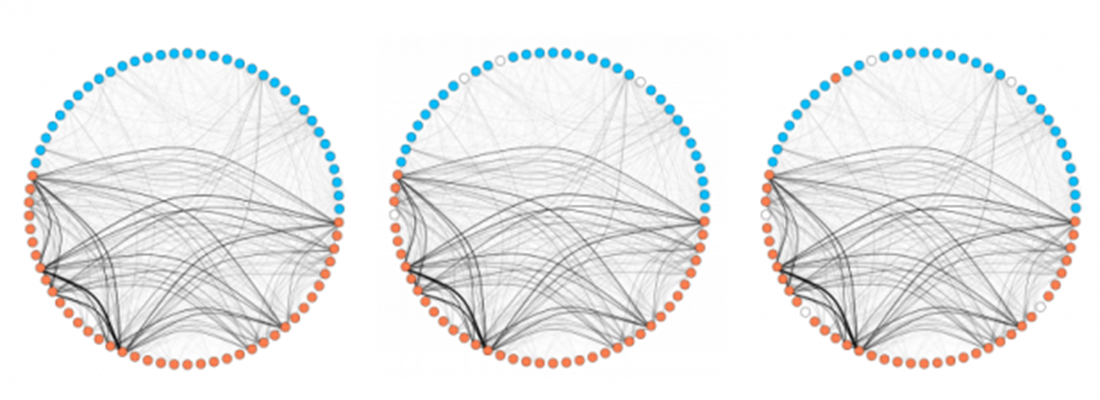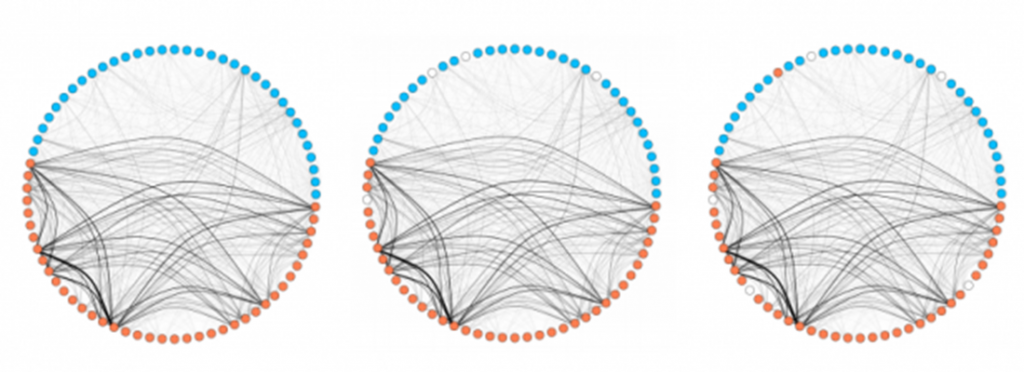
Great discussion about the spectrum of social cultures. And how they can be ‘tight’ or ‘loose’. More importantly, what are the pros and cons of each, and when does a specific culture type make an exception.
(more…)Category: Society
-

Your Mood Determines What You Will Do
The Wall Street Journal published a compelling idea backed but by research that indicates you are controlled to some degree by your mood. Meaning the choices you take, and the decisions you make.
(more…) -
You Can’t Prove Everything That’s True
It’s a lot to wade through for a casual video. But it’s worth it for a big reveal at the end.
(more…) -
The Danger of Conspiracy Theory
A recent article on The Richard Dawkins Foundation gave a few examples of conspiracy theories that were entirely made-up and had very real consequences.
In 2013, a report from the World Economic Forum suggested that online misinformation represents a significant risk to modern society.
Normally, we casually dismiss alternative explanations for things that are not easy to explain. But the Internet has given conspiracy theories more weight than they deserve.
I believe one of the problems is in the name itself. A ‘conspiracy theory’ is often not a theory at all. At least not a Scientific Theory which is what many are reaching for I think.
A scientific theory is a well-substantiated explanation of some aspect of the natural world that can incorporate facts, laws, inferences, and tested hypotheses. A scientific theory is differentiated from a hypothesis in that a theory must explain actual observations.
More often than not it is pure speculation. And I suppose that is fine. If it were not for people making decisions based on that speculation.
-
UBI is Personal Venture Capital Investment in You
For decades the Tech industry, and society, has embraced the concept of venture capital funding. Where early investors provide funding and management knowledge and resources to grow a promising idea. A “startup” in other words.
(more…) -
It’s In The Eyes
Engadget published a great article on the psychology around putting eyes on a tip jar. Fascinating that we instinctively respond more favorable to things that we perceive has having a “face”.
Interestingly, the study found that had a noticeable but smaller effect on people when the supermarket was busy. During those hours, people contributed to the eye-equipped charity bins at a 30 percent higher rate than the standard buckets. But when the grocery store was quiet, people tossed 60 percent more cash into the jars with eyes on them.
The study took place over the course of 11 weeks in a busy supermarket in Northern England. The experiment placed white, plastic buckets containing the store’s logo and the name of a charitable cause at the end of six checkouts. The only change made to the buckets over the course of the study was the addition of “subtle eye images,” and that was all it took to see donations increase by nearly 50 percent. During the weeks the plain buckets were in place, they tallied £5.48 per 1,000 customers. With the addition of eyes, the giving jumped to £6.69 per thousand customers.