Category: Technology

  • Drivers Need Not Apply

    Drivers Need Not Apply

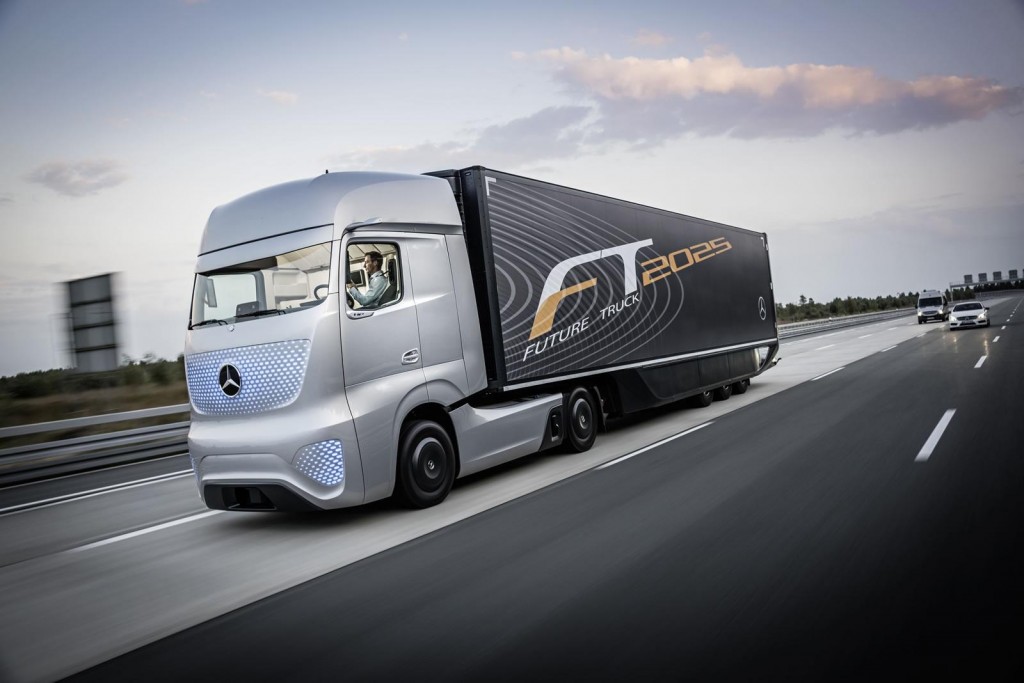
    In a follow-up to the previous post about automation eliminating jobs for humans, Wired magazine reported on the autonomous Mercedes Benz semi truck . Although Mercedes Benz claims the driver will become a ‘Transport Manager’ in a relaxing spacious cabin, if you start to think through the usage scenario of this truck, it’s quite obvious there will be no one behind the wheel.

    Mercedes Benz states,

    The challenge now,” Bernhard [Daimler board member for trucks and buses] says, “is to leverage this momentum and to continue our open dialogue with all parties involved, so that in ten years’ time the autonomously driving truck will indeed have become an accepted feature on our roads.

    10 years time. That is not when the automation will begin. That is their target for it to “become an accepted feature”.

    Let’s assume there WILL be a “Transport Manager” in the cabin…

    The risk associated with the job is drastically reduced with an autonomous truck. The level of skill needed for that job will be significantly reduced. As a result, the wages for that job will be significantly reduced. Additionally, the labor pool is significantly increased if the semi truck is autonomous.

    Drivers that retire, because they can no longer focus for long stretches, are now able to get back on the road. That facilitates an increasing labor pool competing for a decreasing number of jobs. And that always drives down wages.

    Why will there not be a Transport Manager in the cabin?

    The truck will be fully automated and can run as long as it has fuel. Eliminating the cost of a driver means the transportation company can afford to spend more money on longer (less congested) routes. The truck will not have to navigate through construction zones because the truck will automatically route around construction zones and reported accidents.

    What becomes of the semi truck driver?

    It’s a great question. There are 3.5 Million semi truck drivers in the United States today. I don’t believe all truck driving jobs will be eliminated, but I wouldn’t be surprised if 90% are eliminated. Eliminating this job will not spawn new jobs, although it will require other transportation related jobs to evolve.

    For example, the semi truck mechanic will now have to troubleshoot and repair the advanced autonomous systems in the truck. There may be a slight number of jobs created due to specialization of the technology, however 90% will be left without a job. That is 3.1 Million people.

    It’s a difficult problem that society is going to have to address very soon.
  • 3D Printed Lego AT-AT Walks!

    3D Printed Lego AT-AT Walks!

    It’s no secret that I do love Legos. In this digital age, there is something very satisfying about snapping or unsnapping blocks together to build something. It’s “meditational”… almost.

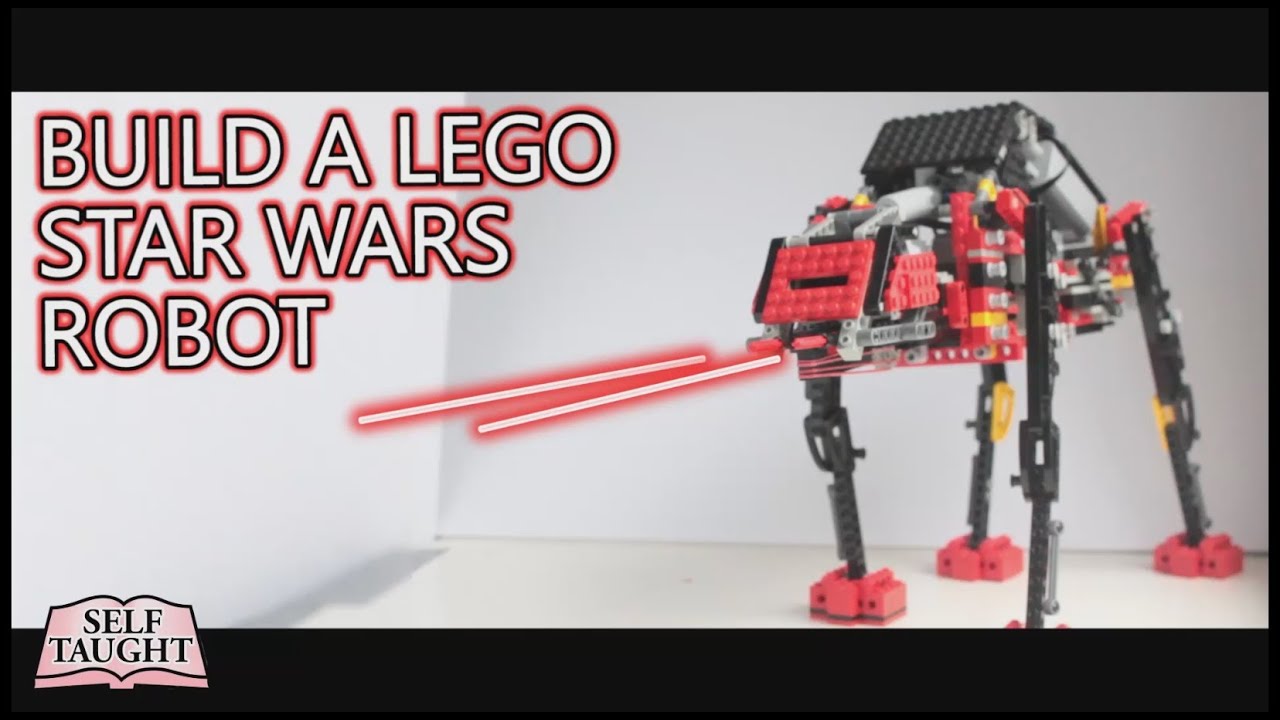
    This Lego-built AT-AT (All Terrain Armored Transport), introduced in the best movie of the Star Wars trilogy, just might actually provide me a practical reason for buying a 3D printer. This project is an actual trilogy of my favorite things; Star Wars, Lego, and 3D printing brought together in one build.

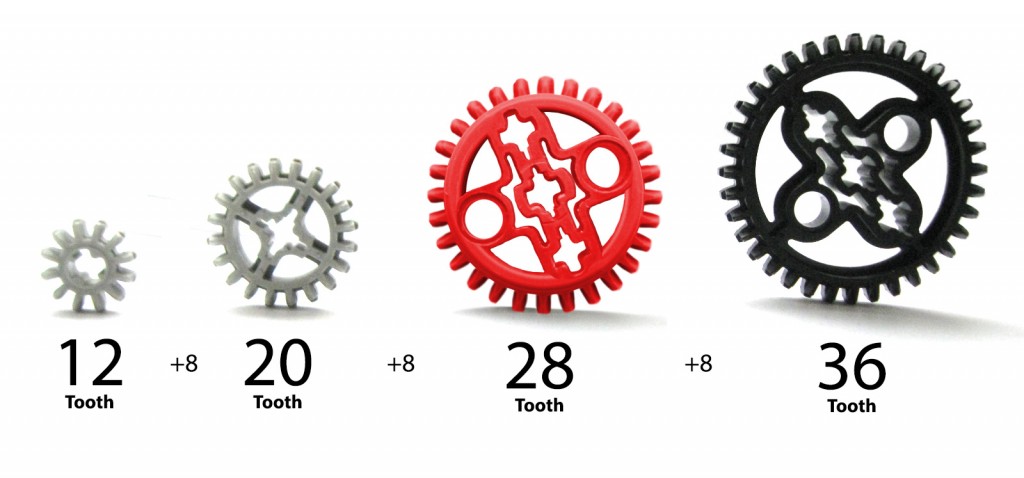
    28-tooth-2-1024x478

    This Imperial Walker is an actual walking AT-AT made possible by some custom 3D printed parts. And…   AND…   it has a working turret gun firing rubber bands at the Rebel Forces.

    Stay young people. Have fun building things.

    Taran Van Hemert

  • Indie Web Trend Future

    Indie Web Trend Future

    I’ve recently learned about the Indie Web movement and I am very excited about it. It signals a move back to the origins of the Internet, which is based on decentralization and personal ownership of content.

    Decentralization is important to the Internet because it helps keep any single entity from becoming too powerful. For example, Facebook wields a lot of power and control as it is the sole keeper of data for nearly a billion people. That’s a lot.

    The Clever Developer site provides a great illustration that shows the difference between a centralized, distributed, and distributed network.

    Network Structure Diagram

    The same could be said for Google, Twitter, Instagram, and several other very large content aggregateors. That isn’t to say that these social networks don’t have value. They do and they provide a meaningful service. But as individuals we have to consider where our information is stored and managed, and whether we are in control of it.

    Indie Web helps address that question. And is a step towards federated content.

    What is Indie Web?

    Indie Web is a recent technology trend that works to provide you applications and services to store, manage, and publish your own content. More in depth information can be found at Indie Web Camp and they have defined three high-level principles to fight back against “corporate web”.

    1. Your content is yours
    2. You are better connected
    3. You are in control

    Those three principles are important because when you login to Facebook, Twitter, Instagram, YouTube and Pinterest, those principles do not apply.

    Indie Web Camp Logo

    Why is it important?

    Moving away from corporate web allows you to operate in an Internet of Federated Content. This means that you create content (articles, photos, videos), publish the content online, and share it with other people without a middle-man service controlling that exchange.

    Obviously there are advantages to corporate web social network services, otherwise they would not be as popular as they are. However, there are some downsides to using online social networks and many people believe they have not lived up to their promise of connecting people.

    Why would it be better?

    Federating your content through Indie Web platforms would provide you several features that the corporate web social networks simply are not going to provide you. Dan Gillmor provides an excellent example in his article, ‘Why the Indie Web movement is so important’, where he writes,

    Suppose you could write in your personal blog and have a summary of your post show up on popular social-media sites like Twitter, LinkedIn, Google+ and Facebook – and then have responses on those sites show up as comments in your blog?

    The idea as you can see is that you produce and curate your content on a site that you personally manage. A site that you have total control over and are not helpless against the whims of a corporate web service that decides to change it’s Privacy Policy to make more money.

    In the near future we there will be applications and services that allow you to federate your content. For those early-adopters, you can likely start now as Gilmor writes,

    …if some talented programmers have their way you’ll soon be able to do so easily. In fact, it’s what I’m doing right now with this post, which is also running at Slate Magazine.

    How you can participate

    If you find the Indie Web trend appealing, there is no better time than now to start. I highly recommend reading through the Indie Web Camp site. It is an Open-Source community and they would welcome all participants during their regular Indie Web related events.

    Known

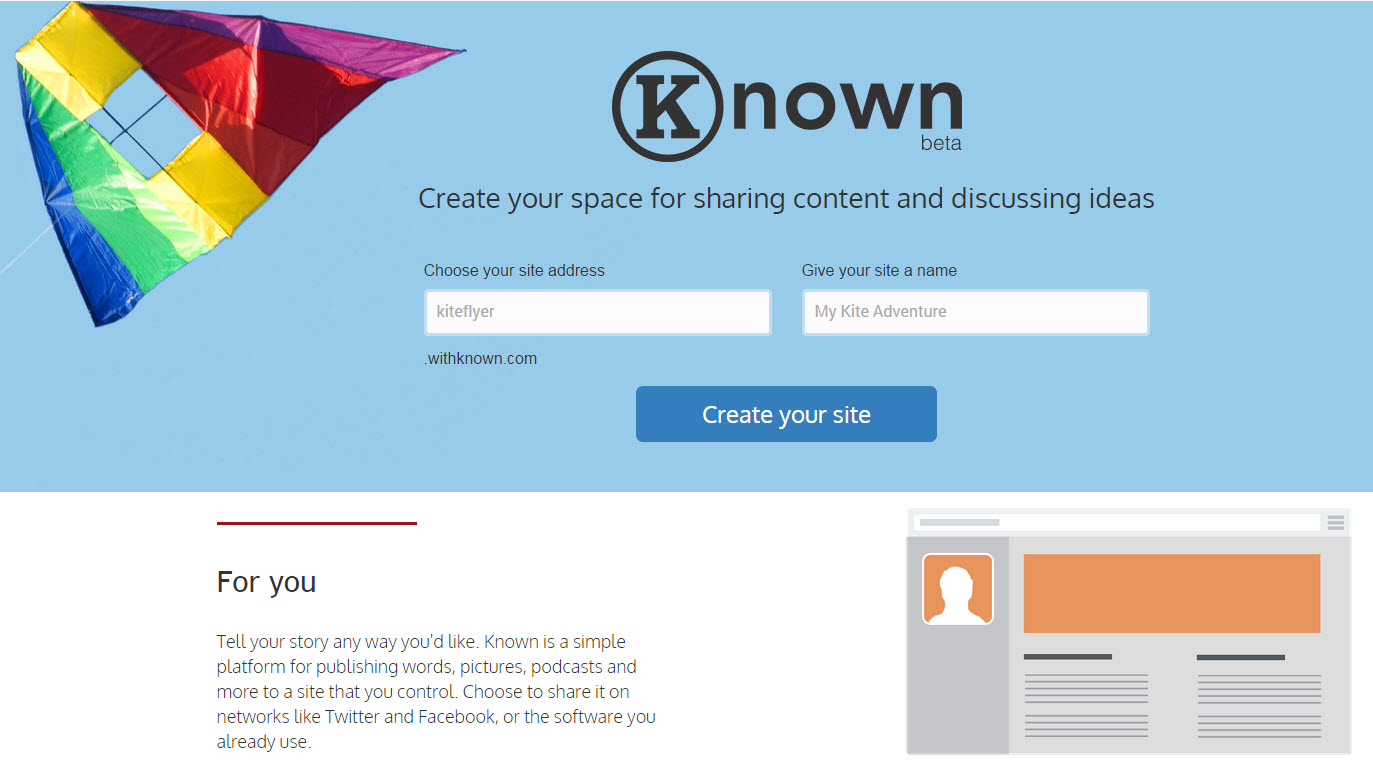
    A new blogging platform to emerge into Beta is simply known as Known. It’s purpose is to help facilitate the Indie Web trend of federating your content.

    With Known Home Page


    POSSE

    Another good source of information (also on the Indie Web Camp site) is POSSE, which is an acronym for Publish (on your) Own Site, Syndicate Elsewhere

    Step in the Right Direction

    I like this trend as it is a step in the right direction to putting ownership of content back into the hands of the people that created it in the first place. Why do I have to sign-in to Facebook to see someone’s photos or an article they wrote? Why can’t I go to THEIR site and see ALL of their content without a corporate constantly monetizing my behavior (and emotions).

    There will be many great features and conveniences to come from the Indie Web trend, however I don’t know if the amount of critical mass that has built up in existing social networks can be swayed. At some point the Indie Web community will have to find a way to make services like Known cooler and more attractive than Facebook and YouTube.

  • Walking Through the Matrix with Oculus Rift

    Walking Through the Matrix with Oculus Rift

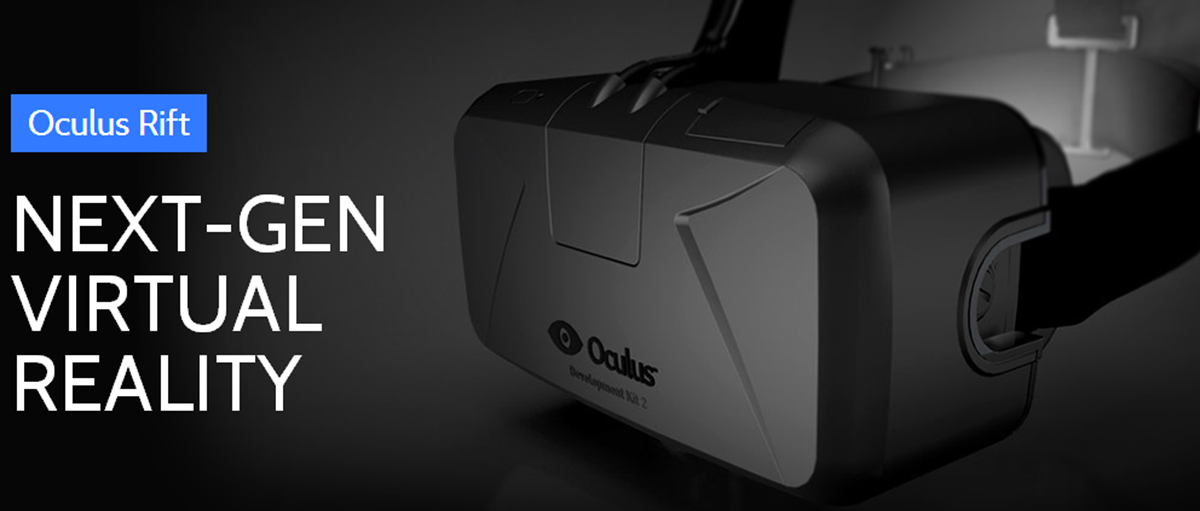
    With great anticipation I am waiting to try the Oculus Rift. It is a virtual reality headset that so far has shown to be truly remarkable.

    Initially I think everyone thought they would provide a super immersive gaming experience like no other. Tom’s Hardware reports that Oculus Rift wearers may find themselves in the middle of a movie.

    Using the Oculus Rift to watch movies is simple enough, and wouldn’t require any kind of specialdevelopment.

    Not just 3D movies, but 360 degree movies.  For this…  I think I would be ok with a remake of the Matrix.


  • Google Offers First Conflict-Free Computer

    Google Offers First Conflict-Free Computer

    Google’s ChromeOS is taking the consumer tech industry by storm with laptops that can’t be matched on value. I personally have used the Toshiba CB35-A3120 13.3-Inch Chromebook and can tell you that you will have to spend 2-3x the money to get similar value.

    It’s a great machine and I would recommend it to anyone. At $269 you just can’t beat it. For a couple hundred dollars more, we will see a new wave of machines with design improvements and an industry first.

    World’s First “conflict free” microprocessor

    The Intel processor offered in upcoming Chromebook’s will be the world’s first microprocessor made out of rare-Earth minerals that are NOT mined in the Republic of Congo by warlords operating slave regimes.

    Chromebooks about to be announced

    20 new Chromebooks will be announced over the next few months with significant improvements. Engadget reports all of the major manufacturers will announce new models in a variety of design.

    Among the new features are:

    • 11 hours of battery life
    • 15% lighter
    • Fanless designs
    • Touchscreen and folding screen designs
    • World’s first “conflict free” microprocessor

    The Google Chromebook isn’t just an incredible performance value. It is a significant humanitarian achievement.


  • Anti-virus Software is a Waste

    Anti-virus Software is a Waste

    Two years ago I made a decision to stop using anti-virus software on my PC and I have not had one problem. I have also not had the related PC issues that anti-virus usually brings with it.

    I based my decision on the following factors.

    1. I use GMail and Google does a fine job of vetting all of my email attachments for viruses and malware.
    2. I don’t click on attachments sent to me unsolicited.
    3. I don’t install applications on my PC that are from questionable sources.

    How do I know my PC is not infected right now?

    1. It is operating perfectly fine with no performance issues.
    2. I tested it with the free Microsoft malware scanning tool called ‘Microsoft Safety Scanner’.

    Am I just a Pollyanna who thinks bad things are what happens to other people? Nope. As Wired magazine reported in their article, ‘Is Antivirus Software a Waste of Money?’

    Dan Guido, the CEO of security startup Trail of Bits also doesn’t use AV. Some security pros use it because they’re in regulated industries, or because they work with customers who require it. “If it weren’t for that,” he says, “almost nobody in the security industry would run it.”

    Test: Did you click on the link and then download and install the Microsoft tool using the link I provided above?

    Result: Then you failed and you should buy an Antivirus security package to save you from yourself.

    I found the tool by performing a Google search, but I didn’t trust that the link was taking me to a legitimate Microsoft site page. So I typed microsoft.com into the URL bar to go to the home page of Microsoft. Where I THEN searched for the tool.

    And that is what you should have done too. When it comes to installing an application on your computer, be certain that you are downloading it from a reputable source.

    You most certainly can live without antivirus software. Just always remember that in doing so, you become the “antivirus software”. And for many of us that works very well.